Which Brazil Destination Should You Visit? Rio, São Paulo, Salvador, Trancoso & Angra dos Reis

It is the one place here that is the city trip, the beach trip and the culture trip at once. 4 to 6 nights, then add one coastal extension.
Brazil is not a country you island-hop. These five sit along 2,000 km of coastline plus an inland capital, and "just add a stop" usually means a domestic flight.
Which makes the two best first trips Rio plus Angra dos Reis, the only pairing reachable entirely by road, or Rio plus Trancoso, a short flight and a transfer for a proper beach week. Everything below is how to get to a different answer on purpose — by season, by budget, by what you actually came for.
Brazil is the fifth-largest country on Earth, and the honest list of places most first-time visitors actually choose between is short: Rio de Janeiro, São Paulo, Salvador da Bahia, and a small handful of coastal escapes like Angra dos Reis and Trancoso. The internet will hand you all five with equal enthusiasm and no order. That is not a decision, it is a map with pins on it.
The way people end up disappointed in Brazil is almost never that they picked a bad place. It is that they picked a good place for someone else's trip: a week in São Paulo when they wanted beaches, a Rio-only trip that missed Carnival by three weeks and got the crowds without the show, a three-stop itinerary that turned out to need three domestic flights and cost more in transfers than in hotels.
So this guide runs in the order the decision actually happens. The constraints first, taste last. By the time you get to the vibe section, most of the list has already sorted itself.
Which Brazil Destination Should You Visit? The Short Answer
First trip to Brazil: Rio de Janeiro, plus one beach extension. Rio gives you the mountains, the beaches and the culture in one city; add Trancoso for a proper beach week or Angra dos Reis for something closer and shorter.
A honeymoon or a design-hotel beach week: Trancoso. Bahia's best-looking town, a short flight and transfer from Rio, and none of the party-town energy of the more famous beaches further north.
Carnival, at full volume: Rio de Janeiro or Salvador — two very different versions of the same festival, both of which need real planning. Olinda, near Recife, is the third option.
Business, food, and a big-city trip with no beach agenda: São Paulo. Brazil's financial and culinary capital, and its main international gateway alongside Rio.
Afro-Brazilian culture, colonial architecture, and warm water year-round: Salvador da Bahia. The country's first capital, its most historic centre, and a climate that barely changes month to month.
The constraints behind that answer, in the order they matter:
- Which airport does your flight actually land at? Direct international flights reach São Paulo (GRU) and Rio (GIG) reliably; Salvador (SSA) and Recife (REC) have a thinner, more seasonal international schedule. Almost everything else is reached by connecting through one of the main cities.
- How far apart are these places, really? Brazil is roughly the size of the continental United States. Rio to Salvador is a 2 to 2.5 hour flight. Rio to Trancoso is a flight plus a road transfer.
- How crowded and how safe does it feel? Brazil drew a record 9.2 million international visitors in 2025, and Rio absorbs a large share of them into a specific, well-known set of neighbourhoods. Outside those neighbourhoods the calculus changes, and it is worth knowing where the line is before you land.
- When are you going? Carnival, southern-hemisphere summer and Bahia's rainy season all move the same country in different directions at the same time.
- What will you spend? Brazil caters to every budget, but in high season — New Year and Carnival — it gets genuinely expensive.
Which Airport Does Your Flight Actually Land At?
The question is not whether a city has an airport; Brazil has around 500 of them. It is whether your international flight lands there directly, or whether you are connecting through São Paulo or Rio first — and how long that second leg then takes, because a domestic hop in Brazil can run past six hours.
Getting In
Sorted by how directly you can arrive:
- São Paulo (GRU). Brazil's main international gateway, with the widest range of long-haul routes from Europe, North America and the rest of Latin America. If you are flying from outside South America, there is a decent chance your itinerary touches GRU whether or not São Paulo is on your list.
- Rio de Janeiro (GIG). The second major gateway, and the more common first stop for leisure travellers because the city itself is the destination rather than a connection. Direct flights from major US, European and Middle Eastern hubs serve GIG.
- Salvador (SSA). Has an international airport, but the direct long-haul network into it is thinner and more seasonal than GRU or GIG. Most travellers reach Salvador on a 2h20m domestic hop from São Paulo, or a similar connection from Rio.
How Long Does It Actually Take, City to City?
| Route | Fastest way | Total travel time |
|---|---|---|
| Rio ↔ São Paulo | Flight (GIG–GRU/CGH) | ~1h flight, or 5–6h drive. One of the busiest air routes in the world, so the timetable is dense |
| Rio ↔ Salvador | Direct flight | 2h–2h30m |
| São Paulo ↔ Salvador | Direct flight | ~2h20m |
| Rio ↔ Trancoso | Flight to Porto Seguro + transfer | ~1h30m flight + 1h15m road |
| Rio ↔ Angra dos Reis | Drive only | 2h–2h30m by car |
Swipe sideways for the full table →
Regions, Not Islands: Why "Just Add Salvador" Isn't Free
Greek islands sit in ferry clusters, and the rule there is one cluster per trip — see our decision guide to the Greek islands for how that plays out. Brazil sits on a coastline the length of Europe's Atlantic seaboard, plus an inland financial capital. The equivalent rule is the same in spirit: treat these five places as two or three loose regions, and don't chain more than one region per week without a very good reason.
- Rio and Angra dos Reis in one trip is the closest thing Brazil offers to the easy two-island week: a 2 to 2.5 hour drive, no flight, no timetable.
- Bahia. Salvador and Trancoso are both in Bahia state, roughly 700 km apart by road, and not an easy pairing despite sharing a state. Salvador is the historic capital in the north; Trancoso is a beach town in the south, reached through Porto Seguro. Treat them as two separate Bahia trips unless you are happy giving up the better part of a day to the transfer.
- São Paulo. Its own thing. Not on the coast in any way that matters for a beach trip, and not naturally chained to anything else here except as a flight connection or a genuine city break.
The practical version: Rio plus Angra dos Reis is the easy, low-effort combination. Rio plus Trancoso is the easy flight-based one, and arguably the best first-timer's itinerary in the country. Salvador plus Trancoso is possible but costs you close to a full day in transit. São Paulo plus anything works as a bookend — a night or two at the start or end — rather than as a co-equal stop.
The failure mode here is not ambition, exactly. It is that Brazil looks smaller on a map of South America than it feels on the ground, and a route that looks like three dots close together is often three separate flights.
How Crowded and How Safe Does It Feel?
Brazil welcomed a record 9.2 million international tourists in 2025, spread across a country of 215 million people, so the crowding question here is less about volume per square kilometre and more about where the tourism experience concentrates and where it thins out.
Rio de Janeiro is the exception, and it is worth being specific rather than vague about it. The tourism-facing city — Ipanema, Leblon, Copacabana, Botafogo, Urca, Barra da Tijuca — is a well-policed, heavily visited, genuinely wonderful place to spend a week, and recent police statistics show violent crime in the city falling for three consecutive years. The advisories that make headlines are almost entirely about a separate set of areas: the favela complexes in the North Zone, Centro after dark, and specific corridors like the Linha Vermelha connecting the airport to downtown. The two Rios barely overlap.
Salvador, Trancoso and Angra dos Reis do not carry the same profile. Salvador's historic centre, Pelourinho, is a major tourist draw with the usual big-city petty-crime caution rather than the layered risk picture of Rio. Trancoso and Angra dos Reis are small enough, and tourism-dependent enough, that the sharp neighbourhood-by-neighbourhood distinctions that matter in Rio mostly do not apply.
Carnival is the other crowd variable, and it cuts differently in Rio than in Salvador. Rio's is concentrated, ticketed and photographed — the Sambadrome parades are a paid, seated spectacle alongside the free street blocos. Salvador's is the larger event by attendance, built around moving sound-system trucks — trio elétrico — through the streets rather than a stadium parade, and it is the pick for travellers who want the scale of Rio's festival without booking a grandstand seat months out.
Crowding is worth scoring rather than sensing, wherever you are going. We rated the best cities in Italy on exactly that axis, and the cities that win on sights are mostly the ones that lose on room to stand in them.
When Are You Going? Two Seasons, Moving in Opposite Directions
Rio and Bahia do not share a calendar, and this is the single most useful piece of trip-timing information for this list of five places.
| Period | Rio de Janeiro & Angra dos Reis | Salvador & Trancoso (Bahia) |
|---|---|---|
| Dec–Mar (summer) | Hottest and wettest around Dec/Jan; Carnival falls in Feb or early March. Peak season, peak prices | Warm, drier than mid-year; high season for beaches |
| Apr–May | Shoulder season; cooling off, fewer crowds, still warm | Transitioning; rain increasing into June |
| Jun–Aug (winter) | Rio's dry season — least rain, mild 22–25°C days, best for hiking and outdoor days | Bahia's rainy season begins around June; showers likely but rarely all day |
| Sep–Nov (spring) | Warming up again, good value, fewer crowds before summer | Improving, drying out toward the low-humidity months of October and November |
Swipe sideways for the full table →
The short version: Rio's dry season, roughly April to September, is Bahia's wetter stretch, and vice versa. If a single trip has to cover both regions, the genuine sweet spot is October to November, or late April to May, when Rio is comfortable and Bahia's rain has not fully set in or has already eased off.
Carnival falls in February or early March depending on the Easter calendar — 2026 runs 14 to 22 February in Rio, and 2027 falls in early-to-mid February. It is a five-day, once-a-year concentration of both crowds and prices in Rio and Salvador alike. Book accommodation up to a year ahead if that is the plan, and expect the opposite if you would rather avoid it: most of the country empties out again within a week of Ash Wednesday.
São Paulo barely moves on this table. It sits inland and at altitude, with a mild subtropical climate that does not swing the way the two coastal regions do — a genuine year-round city-break destination in a way none of the other four quite are.
What Will It Cost?
Brazil's accommodation spread is wide, and it runs almost the opposite direction from what first-time visitors expect: the beach towns, not the big cities, hold the most expensive rooms on this list.
| Tier | Typical per night | Where |
|---|---|---|
| Budget | $25–70 | Rio outside peak and Carnival, São Paulo, Salvador's historic centre, Angra dos Reis guesthouses |
| Mid-range | $80–200 | Rio Zona Sul hotels, São Paulo business hotels, Trancoso pousadas outside the design-hotel core |
| Premium | $250–800+ | Trancoso's Quadrado design hotels, Rio Carnival-week rates, private Angra island stays |
Swipe sideways for the full table →
Read those as floors outside peak weeks, not as what you will pay during Carnival or the December–January high season, when Rio prices in particular move sharply upward and availability tightens fast.
Angra dos Reis is the outlier worth understanding on its own terms, because the same destination spans almost the entire range depending on how you visit it. A shared day-trip boat tour from Rio, lunch included, starts around $22 to $40. A private speedboat charter to the same 365-island bay runs into the hundreds. A weekend actually staying on Ilha Grande or one of the smaller islands is its own budget again. This is less a price tier than a menu.
Food stays reasonable almost everywhere here: a Rio boteco lunch with a plate and a beer runs $8 to $15, a proper feijoada or churrascaria dinner $20 to $40, and Bahian specialities like moqueca or acarajé in Salvador sit toward the lower end of that range for genuinely excellent food. São Paulo is the exception — its top restaurant scene, one of the strongest in Latin America, has a price ceiling to match the ambition.
Domestic flights are the line item people forget. Rio–Salvador or São Paulo–Salvador each run $60 to $150 one way depending on how far ahead you book, and Trancoso adds a further $20 to $40 for the Porto Seguro road transfer. A three-stop Brazil trip for two adds up to a real budget line, in the same way island-hopping ferries do in Greece. If your dates are flexible, when you book moves the hotel more than the flight — which on a Rio Carnival week is the difference between the premium band and the mid-range one.
What Do You Actually Want? Choosing by Vibe
The constraints have narrowed the list by now. This part is preference — and these five are five genuinely different holidays, not five ranks on one list.
Which Brazilian Destination Is Best for First-Timers?
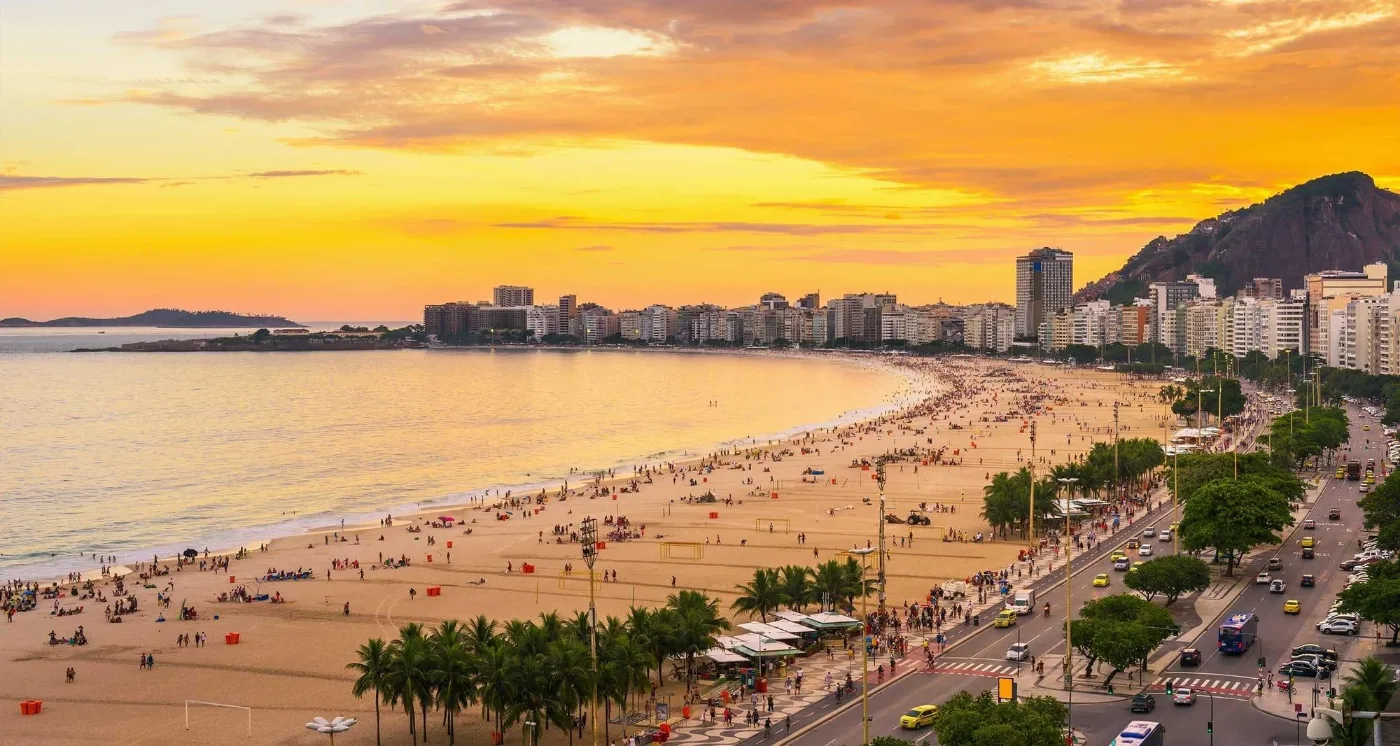
Want the postcard version of Brazil without overcomplicating the logistics? Go to Rio de Janeiro, because it is the one place here that is simultaneously the beach trip, the city trip and the culture trip in one stop. Sugarloaf, Christ the Redeemer, Copacabana and Ipanema, a genuinely great restaurant scene, all inside one well-connected, well-policed tourist zone. Add four or five nights in Trancoso afterward via the Porto Seguro flight if you want the beach week Rio's city beaches do not quite deliver.
Which Brazilian Destination Is Best for a Design-Hotel Beach Honeymoon?
Want the beach town everyone's feed has quietly agreed is the good one? Go to Trancoso. The Quadrado — a grassy square lined with colourful colonial-era houses turned into boutique hotels and restaurants — is unlike anywhere else on this list, and the beaches south of town are some of the best in Bahia. It is a flight plus a transfer to get to, which is exactly what keeps it from becoming Rio's beaches with better sand.
Which Brazilian Destination Is Best for Carnival?

Want the festival at full scale? Go to Rio for the ticketed Sambadrome spectacle and book a year out, or go to Salvador for the bigger, freer, street-level version built around moving sound trucks rather than a stadium. Rio is the one everyone has seen on television; Salvador is the one locals will tell you is the more authentic party.
Which Brazilian Destination Is Best for a Quick Weekend from Rio?
Want to leave the city without a flight? Go to Angra dos Reis. Two to three hours by car, 365 islands, the "Brazilian Caribbean" nickname attached to spots like Ilha de Cataguases, and options ranging from a $22 day-trip boat tour to a full weekend based on Ilha Grande. It is the one destination here that works as an add-on rather than a trip of its own.
Which Brazilian Destination Is Best for Food, Business and City Life?

Want the country's culinary and financial capital, with no beach agenda? Go to São Paulo. It is the main international gateway alongside Rio, has arguably Latin America's best restaurant scene, and runs on a mild, stable climate that does not dictate your dates the way the coast does. Not the trip for someone chasing beaches, and the better trip for someone who is not.
Which Brazilian Destination Is Best for History and Afro-Brazilian Culture?
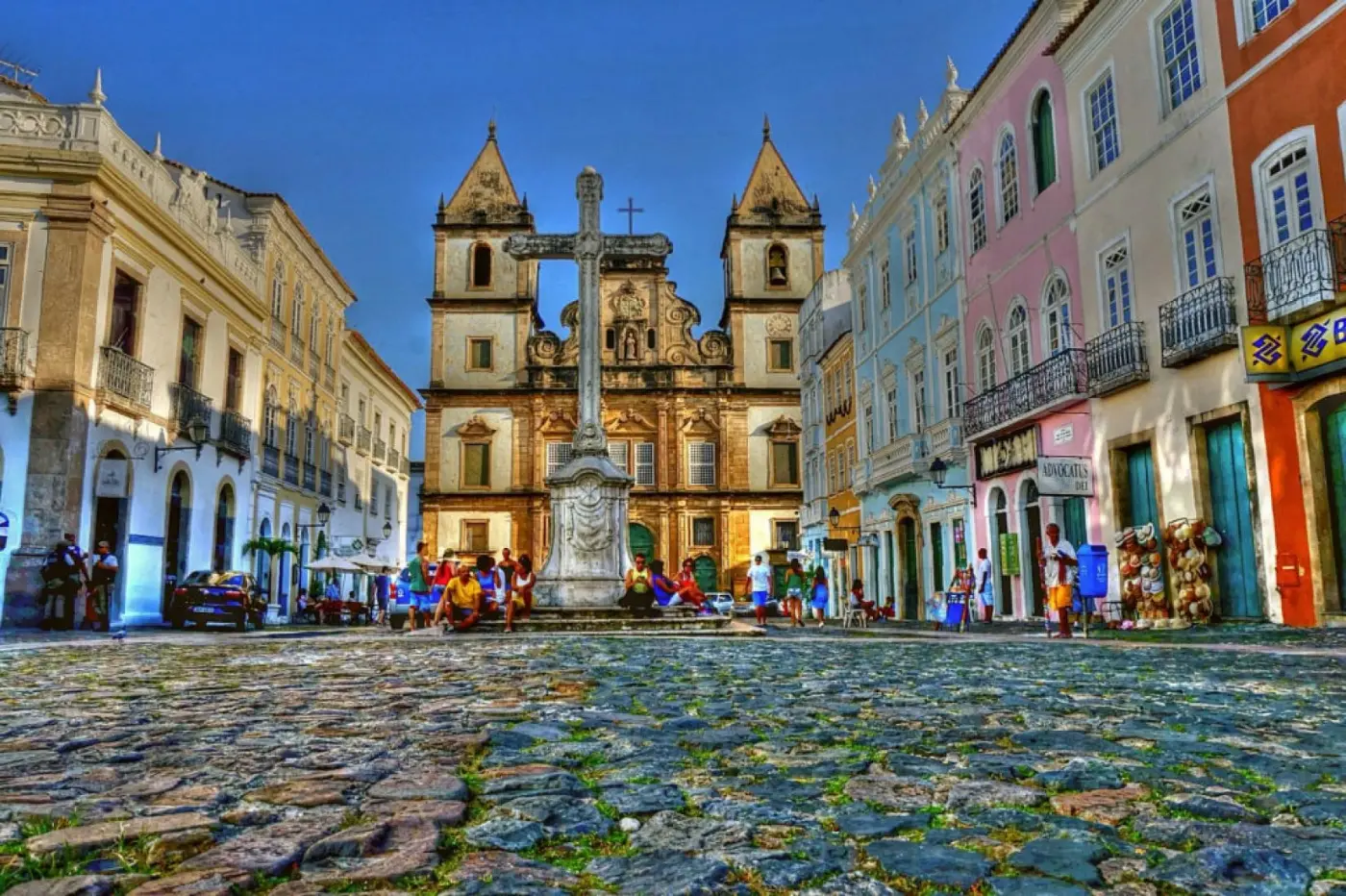
Want colonial architecture, the country's first capital, and a culture shaped as much by West Africa as by Portugal? Go to Salvador da Bahia. Pelourinho's historic centre, the Balé Folclórico da Bahia, and a climate that barely varies month to month make it the pick for travellers whose Brazil trip is about culture and history rather than beach-hopping.
The Destinations, Compared
| Destination | Region | Getting there | From Rio | Crowds | Price | Best for |
|---|---|---|---|---|---|---|
| Rio de Janeiro | Southeast | Direct intl. flights (GIG) | — | High in Zona Sul, extreme at Carnival | $$–$$$ | First trips, city + beach + Carnival |
| São Paulo | Southeast | Direct intl. flights (GRU) | ~1h flight / 5–6h drive | Moderate, spread out | $$ | Food, business, city breaks |
| Salvador da Bahia | Northeast | Thin direct intl., mostly a domestic hop | 2h–2h30m flight | Moderate, concentrated in Pelourinho | $–$$ | History, Carnival, Afro-Brazilian culture |
| Trancoso | Northeast | Domestic flight to Porto Seguro + transfer | ~1h30m flight + 1h15m road | Low–moderate, seasonal | $$–$$$ | Honeymoons, design-hotel beach weeks |
| Angra dos Reis | Southeast | Drive only, no airport | 2h–2h30m by car | Low outside weekends | $–$$$ | Weekend trips, island-hopping by boat |
Swipe sideways for the full table →
Price bands and crowd levels are our own read, based on the flight, hotel and safety data above; both shift meaningfully around Carnival and the December–January peak.
Still Not Sure?
That is the normal state, and it is the reason we built Escapada. The narrowing above is mechanical: your departure city, your dates, your budget and how much moving around you will tolerate eliminate most of the list before taste is involved. What is left is a shortlist you can actually choose from — which is what how Escapada works describes.
Tell Max your dates, where you are flying from and what the trip is for. He will tell you which of these five actually connect on your days, what the domestic legs cost, and when the honest answer is to move your dates rather than your destination.
Max will ask about ages, dates and budget — and build an itinerary with flights, hotels and things to do.
Frequently Asked Questions
Which Brazilian destination should I visit for the first time?
Rio de Janeiro, with a beach extension. Rio alone covers the city, the beaches and the culture; adding four or five nights in Trancoso via a domestic flight through Porto Seguro, or a weekend in Angra dos Reis two hours away by road, rounds it out without overcomplicating the logistics.
Is Rio de Janeiro safe to visit?
Yes, for the tourist-facing South Zone neighbourhoods — Ipanema, Leblon, Copacabana, Botafogo, Urca — where violent crime has fallen for three consecutive years according to municipal statistics. The risk profile changes sharply outside those areas, particularly in favela complexes and parts of the North Zone; most travel advisories are describing those areas, not the ones you will actually spend your week in.
Can I visit Salvador and Trancoso on the same trip?
Yes, but budget close to a full day for the transfer — there is no direct flight between them, so you are routing via Porto Seguro or overland. Most travellers treat them as two separate Bahia trips rather than one combined itinerary unless they have ten or more days in the state.
How do I get to Angra dos Reis?
By car only — there is no commercial airport. It is a 2 to 2.5 hour drive from Rio, doable as a day trip from around $22 for a shared boat tour, or as a weekend stay on Ilha Grande or one of the 365 islands in the bay.
When is the best time to visit Rio de Janeiro?
April to September is Rio's dry season — mild, low-rain, and good for outdoor days. December to March is hot, more humid, and includes Carnival, whose dates shift with the Easter calendar; 2026 runs 14 to 22 February. Both are good trips; they are just different trips.
When is the best time to visit Bahia (Salvador and Trancoso)?
Roughly the opposite of Rio's calendar. Bahia's rainy season begins around June and eases off by October and November, which is generally considered the region's best window: warm, drier, and ahead of the December–January peak crowds and prices.
Is Rio or Salvador better for Carnival?
Rio's Carnival is the famous, ticketed Sambadrome parade alongside free street parties. Salvador's is bigger by attendance, built around moving sound-truck parades — trio elétrico — rather than a stadium format, and generally considered the more street-level, less-touristed version of the same festival.
Do I need a domestic flight to see more than one of these places?
For any combination involving Salvador or Trancoso, yes. Rio and Angra dos Reis are the one pairing on this list reachable entirely by road. São Paulo connects to everything by a short domestic flight, rarely by a practical drive.
Is Trancoso worth the extra transfer?
For a genuine beach week, most travellers say yes — it is widely considered Bahia's best-looking town, with a boutique-hotel scene built around the Quadrado that does not really have an equivalent elsewhere on this list. If a beach is not the point of the trip, the transfer time is harder to justify.
How many of these five places should I try to see in one trip?
Two, comfortably, in ten to fourteen days: Rio plus Trancoso, or Rio plus Angra dos Reis, are the two combinations that do not cost you a disproportionate share of the trip in transfers. Three starts to feel like a logistics exercise, given Brazil's size.
Sources and Further Reading
- Domestic flight times and route data from flight-time aggregators for São Paulo–Salvador, Rio–Porto Seguro and related routes.
- Road transfer times for Porto Seguro–Trancoso and Rio–Angra dos Reis from transfer operators and route-planning services.
- Brazil's 2025 international tourist arrivals, as reported from government figures.
- Rio de Janeiro safety and neighbourhood guidance, favela population figures (IBGE 2022 Census) and current advisory context from Brazil-focused safety guides.
- Seasonal weather and rainfall patterns for Rio de Janeiro and Bahia from regional travel-planning guides.
- Carnival 2026 and 2027 dates from official Rio Carnival scheduling sources.
- Angra dos Reis island count and boat-tour pricing from regional tour operators.
Figures here were accurate at the time of writing and change with the season — flight schedules, hotel rates, Carnival dates and safety statistics in particular are worth re-checking closer to your travel dates. The "last updated" date above the article is when we last went through them.
We build an AI travel agent that plans and books trips, so we spend a lot of time inside flight schedules, transfer times and hotel inventory. Figures here were accurate at the time of writing and change with the season; Brazilian domestic schedules and Carnival-week rates in particular move fast.