Ocean to Desert — a 14-Day Family Road Trip Through California's National Parks
Family of 4 · 13 nights · one-way road trip·California, USA
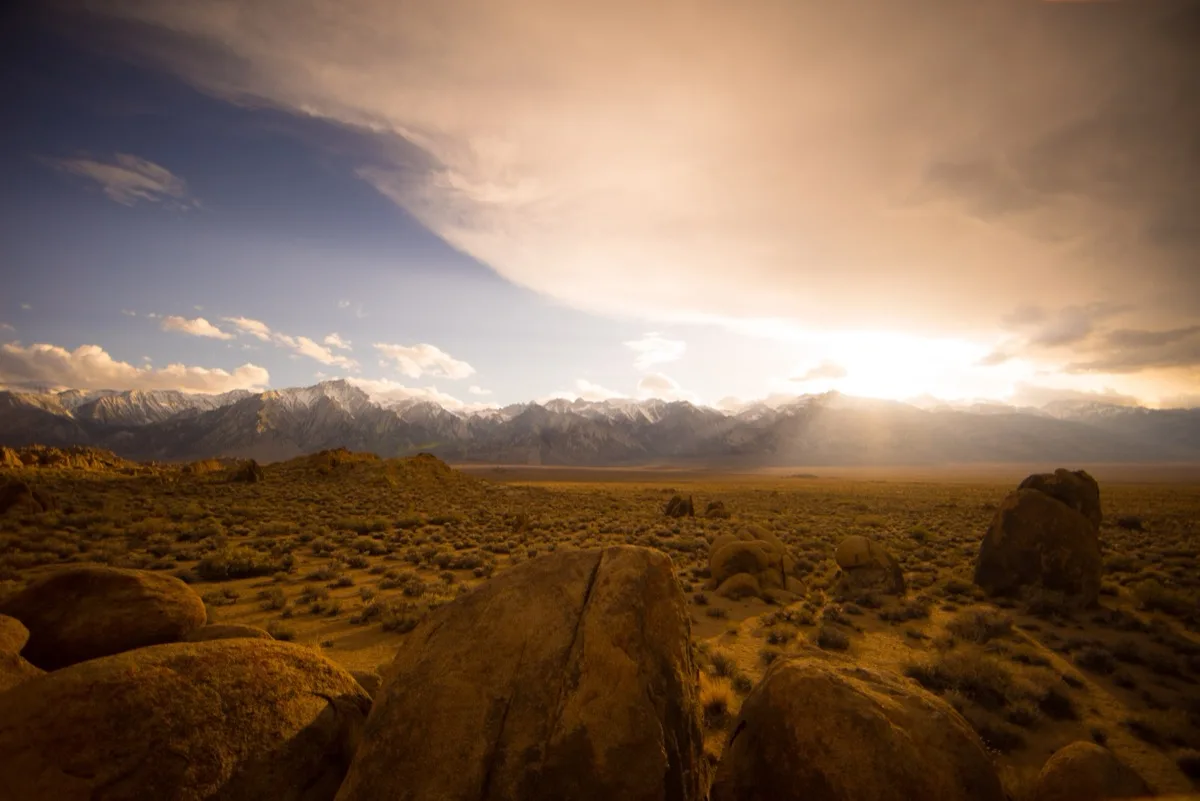
Stock photographs — nobody at Max has driven this route with a camera yet.
Love it? Take it with you
A free personal copy · your dates · everything editable
Nights
13 nights
Shape
Family of 4 · 13 nights · one-way road trip
Weather
6–34°C
FamiliesRoad tripNational parksHikingPhotography
California is not one place but four, and this route crosses all of them: a cold-water city on a bay, a granite valley, a forest of 3,000-year-old trees, and a desert that drops below sea level. Max built it from a real request — a family with children of 12 and 15, two weeks, and one instruction: national parks, without sleeping somewhere new every night.
The order is deliberate. San Francisco first, with no car at all, because jet lag and $60-a-night parking do not belong in the same two days. Then east to Yosemite for three nights inside the valley, south for one big day among the sequoias, and east again — the trip's long day — into Death Valley. Down to Joshua Tree, and finally out to the Pacific at Santa Monica. Beside every choice, Max's "why".
It also says plainly what does not work. Sequoia to Death Valley is six and a half hours at the wheel and there is no way to shorten it — no road crosses the Sierra there — so it is built as a day with a genuine stop in the Alabama Hills rather than as a transfer. And Kings Canyon proper is not in here: it needs a further full day, and that is said out loud rather than buried.
Read it as inspiration — or hit "Copy this trip": you'll get your own version with upcoming dates, car included, and change whatever you like.
The hotels.
San Francisco · 2 nights
Hotel Zephyr
Fisherman's Wharf · ★★★★ · 8.4 6,100 reviews
Outdoor games yardTwo queen bedsWalk to the ferriesPaid parking
Family room, two queen beds · Room only · Pay at the property; parking charged separately per night
Why it's here: These two nights have no car, so location is the entire argument: Pier 33 and the Alcatraz ferry, the cable car turntable and the bike shop are all within a ten-minute walk. The outdoor yard full of oversized games is the thing that saves the first jet-lagged evening.
Inside the parkShuttle stop at the doorBike hireFood courtFree parking
Family room, two queen beds and a balcony · Room only · Prepaid; cancel up to 7 days before
Why it's here: Sleeping in the valley is logistics, not luxury: the valley lots fill by 7:30am, and anyone staying outside spends the best light of the day hunting a space. From here you walk or shuttle to every trailhead and come back for lunch without driving. Book it the day your dates are fixed — rooms open 366 days ahead and go.
Sequoia · 2 nights
Buckeye Tree Lodge
Three Rivers, a mile from the park gate · ★★★ · 9 1,400 reviews
Balconies over the Kaweah RiverPoolKitchenettes in some roomsFree parking
Family room with a river balcony · Room only · Pay at the property
Why it's here: Sleeping outside the park rather than up at Wuksachi is a deliberate trade, and it buys one thing: the longest drive of the trip leaves from here tomorrow, and this saves roughly an hour of switchbacks off the front of it. What you give up is a morning among the trees. On this particular day that is the right way round. The balconies sit directly over the river.
Death Valley · 2 nights
The Ranch at Death Valley
Furnace Creek, in the middle of the park · ★★★★ · 8.6 5,400 reviews
Spring-fed pool at 30°CLawns and date palmsFuel and a storeRestaurants on siteFree parking
Family room, two queen beds · Room only · Pay at the property
Why it's here: The pool here is infrastructure rather than indulgence: it is fed by a natural warm spring, sits at about 30°C, and it is what keeps a family indoors between 11am and 4pm — hours when being outside in Death Valley is a mistake. It is also the only place within an hour with fuel, ice and a shop.
Joshua Tree · 2 nights
AutoCamp Joshua Tree
Joshua Tree town, ten minutes from the west entrance · ★★★★ · 9.1 1,100 reviews
Airstream sleeping 4Kitchenette and private bathroomPrivate fire pitPool and clubhouseDark sky
31-foot Airstream, queen bed and a sofa bed · Room only · Prepaid
Why it's here: After eleven nights of hotel rooms, a night in an Airstream with a fire pit outside is the one the children will actually describe afterwards. It is also the right side of the park — ten minutes from the west entrance, which is the gate you want for the good half, rather than coming in from Twentynine Palms.
Opposite Santa Monica PierHeated poolOcean-view roomsBike hirePaid parking
Family room with an ocean view · Room only · Pay at the property; parking charged separately per night
Why it's here: The last two nights should be somewhere you can walk to the sea, not an airport hotel. From here you cross the road to the pier, ride the beach path down to Venice, and are still only 35 minutes from LAX the next morning.
The car.
Enterprise · Mid-size SUV, automatic
Toyota RAV4
Pickup: Downtown San Francisco · Mon 08:30
Drop-off: Los Angeles International Airport · Fri 11:00
Unlimited miles · Full to full · Free cancellation until 48 hours before pickup
The itinerary, day by day.
The exact calendar your copied trip opens with — flights, hotel, and every place in its part of the day. Tap any block to see it on the map.
Sat
10Oct
Day 1
San Francisco
Sun
11Oct
Day 2
San Francisco
Mon
12Oct
Day 3
Yosemite
Tue
13Oct
Day 4
Yosemite
Wed
14Oct
Day 5
Yosemite
Thu
15Oct
Day 6
Sequoia
Fri
16Oct
Day 7
Sequoia
Sat
17Oct
Day 8
Death Valley
Sun
18Oct
Day 9
Death Valley
Mon
19Oct
Day 10
Joshua Tree
Tue
20Oct
Day 11
Joshua Tree
Wed
21Oct
Day 12
Los Angeles
Thu
22Oct
Day 13
Los Angeles
Fri
23Oct
Day 14
Los Angeles
Stay
Morning
until 12:00
Afternoon
12:00–17:00
Evening
from 17:00
Travel
🚗 Car pickup
Mid-size SUV, automatic
Click for the full details
Activity
Alcatraz Island
The ferry from Pier 33, then the cellhouse audio tour — narrated by guards and inmates who were actually there. Three hours door to door.
Click for the full details
Activity
Yosemite Village
Keys at a city-centre desk at 8:30, then about four hours on Highway 120 through Groveland to the park's western gate.
Click for the full details
Activity
Vernal Fall footbridge
From Happy Isles, a paved kilometre and a half of climbing to the bridge facing the fall. Anyone with legs left carries on up 200 granite steps to the top.
Click for the full details
Activity
Glacier Point
An hour's drive from the valley and 980 metres above it: a railing that looks Half Dome straight in the face, with three waterfalls in the same frame.
Click for the full details
Activity
Mariposa Grove of Giant Sequoias
An hour south of the valley: park at the Welcome Plaza and take the free shuttle down. Waiting at the bottom, the Grizzly Giant at roughly 3,000 years old, and a tree somebody cut a tunnel through in 1895.
Click for the full details
Activity
General Sherman Tree
An hour of switchbacks and 1,500 metres of climb up to the Giant Forest, then down to the largest tree on earth — 84 metres — and a 3 km loop among the rest of them.
Click for the full details
Activity
Lone Pine, Owens Valley
Four and a half hours south then east: the 198 to Visalia, the 99 to Bakersfield, the 58 over Tehachapi Pass, and US-395 north into the Owens Valley.
Click for the full details
Activity
Zabriskie Point
Ten minutes from the hotel to a terrace above crumpled badlands that go orange as the sun comes up behind you, then 3 km into the canyon itself before it warms.
Click for the full details
Activity
Baker, California
The 190 east to Death Valley Junction, then the 127 south through Shoshone to Baker — home to the tallest thermometer in the world, all 41 metres of it.
Click for the full details
Activity
Barker Dam and Hidden Valley
Two short loops just inside the west entrance: a valley walled in by rock that nineteenth-century cattle rustlers used as a pen, and a small reservoir with Serrano rock art beside it.
Click for the full details
Activity
Palm Springs, California
An hour south-west, from 900 metres of high desert down into a valley of palms and 1950s modernist architecture.
Click for the full details
Activity
Venice Canals, Dell Avenue
The Marvin Braude path hugs the sand the whole way: the Venice boardwalk with its weightlifters and skaters, and three streets inland, real canals with little bridges from 1905.
Click for the full details
Travel
🚗 Car drop-off
Mid-size SUV, automatic
Click for the full details
Activity
Santa Monica Pier
Late checkout if they'll give you one, and a final hour on the sand in front of the hotel.
Click for the full details
Activity
San Francisco International Airport
Half an hour from the terminal to Embarcadero, then a short cab or the 8 bus to the waterfront. No rental desk today.
Click for the full details
Activity
Pier 39 and the sea lions on K-Dock
Several hundred of them hauled out on K-Dock in the winter of 1989 and simply never left. Free, loud, and smells like it.
Click for the full details
Activity
Golden Gate Bridge
Hire bikes at the wharf, roll along Crissy Field, cross the bridge, freewheel down into Sausalito — and put the bikes on the ferry home.
Click for the full details
Activity
Yosemite Village
Keys at a city-centre desk at 8:30, then about four hours on Highway 120 through Groveland to the park's western gate.
Click for the full details
Activity
Tunnel View, Yosemite National Park
You come out of the tunnel and the whole valley arrives at once — El Capitan on the left, Half Dome at the back. Ten minutes on, the base of the fall.
Click for the full details
Activity
Mirror Lake, Yosemite Valley
Hire bikes at the lodge and ride the paved loop out to El Capitan Meadow and up to Mirror Lake — dead flat, and you see more of the valley than the road shows you.
Click for the full details
Activity
Taft Point
An 8 km loop off the same road: open fissures at the cliff edge at Taft Point, and a bare granite dome with a full 360 at Sentinel.
Click for the full details
Activity
Three Rivers, California
Highway 41 drops out of the mountains into farm country, then the 99 and the 198 east — about three hours of orange groves, almond orchards and petrol stations.
Click for the full details
Activity
Moro Rock
Four hundred steps cut into a granite dome looking out over the Great Western Divide, then the meadow John Muir called the gem of the Sierra — and a tree that fell in 1937 with a hole cut through it you drive under.
Click for the full details
Activity
Lone Pine, Owens Valley
Four and a half hours south then east: the 198 to Visalia, the 99 to Bakersfield, the 58 over Tehachapi Pass, and US-395 north into the Owens Valley.
Click for the full details
Activity
Mobius Arch, Alabama Hills
Rounded boulder country directly beneath Mount Whitney, the highest point in the lower 48. A fifteen-minute walk reaches a natural arch that frames the whole Sierra crest.
Click for the full details
Activity
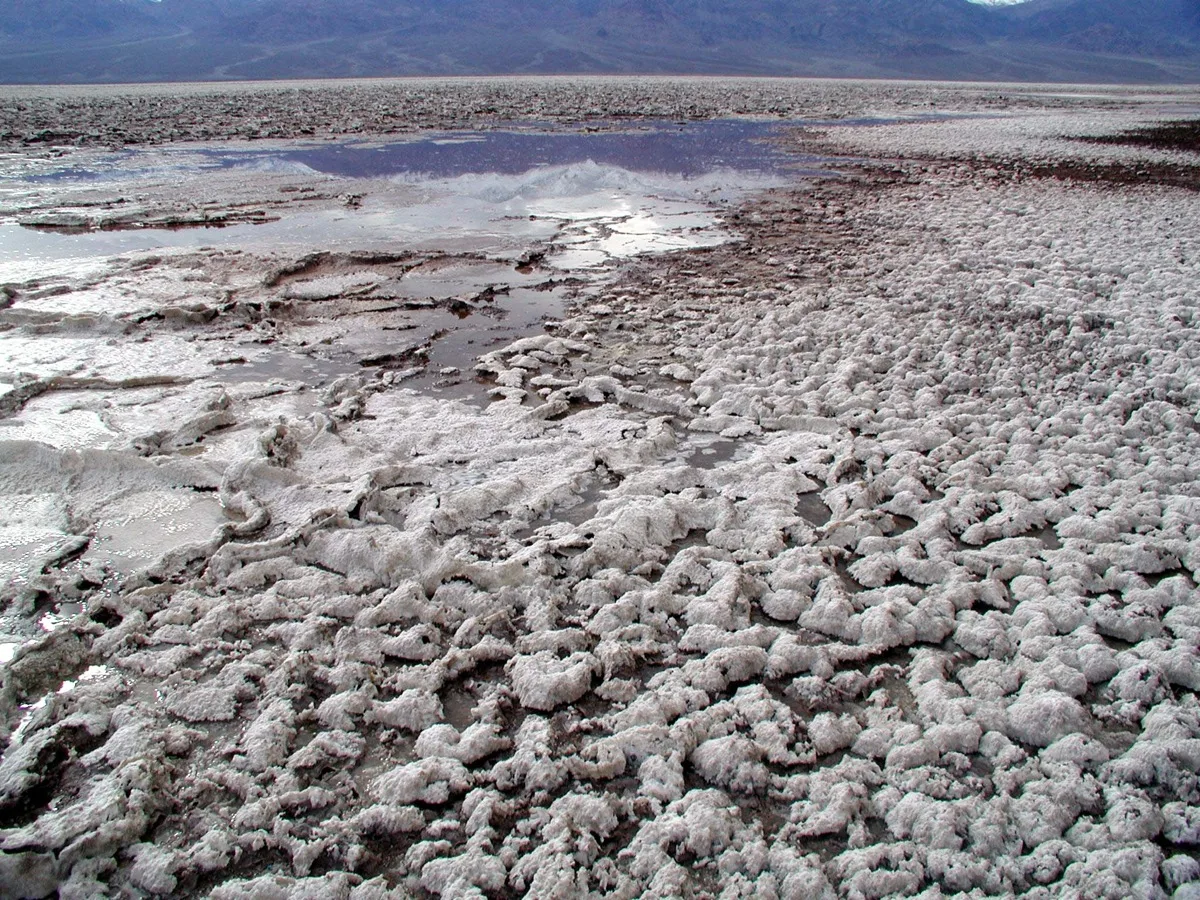
Badwater Basin
The lowest ground in North America, 86 metres below sea level, with a sign on the cliff marking where the sea would be — and on the way back, 14 km of one-way road through hills of green, pink and violet.
Click for the full details
Activity
The Ranch at Death Valley, Furnace Creek
Back at the ranch by 11:30 and not moving until four: pool, shade, the Borax Museum and the thermometer by the gate.
Click for the full details
Activity
Kelso Dunes, Mojave National Preserve
Kelbaker Road crosses the preserve north to south through lava fields and Joshua tree forest, past 200-metre dunes that boom when you slide down them.
Click for the full details
Activity
Jumbo Rocks
Two or three hours on real rock with a guide and kit provided — Joshua Tree is one of the great climbing venues on earth, with more than 8,000 charted routes.
Click for the full details
Activity
Cholla Cactus Garden
A car-sized skull right at the roadside, a boulder field built for scrambling, then half an hour south to a basin filled with thousands of densely packed cholla.
Click for the full details
Activity
Santa Monica Pier
Two and a half hours through Riverside and downtown Los Angeles, until the freeway simply stops in Santa Monica.
Click for the full details
Activity
Griffith Observatory
A 1935 art-deco building on the Hollywood hillside: a Foucault pendulum, a Tesla coil, a Zeiss telescope open to the public after dark — and the Hollywood sign from the terrace.
Click for the full details
Activity
Los Angeles International Airport
Thirty-five minutes south, then the airport's new consolidated rental centre, with its own train to the terminals.
Click for the full details
Activity
North Beach, San Francisco
San Francisco's Italian quarter, ten minutes south — wood-fired pizza, pavement tables and gelato on the walk back.
Click for the full details
Activity
Powell–Hyde cable car turntable
Board at the turntable by the wharf, ride over the crest above Lombard Street, and finish among the food stalls in the Ferry Building.
Click for the full details
Activity
Sentinel Bridge and Cook's Meadow
A flat kilometre-and-a-half boardwalk loop in the middle of the valley, Half Dome on one side and the dry Yosemite Falls on the other.
Click for the full details
Activity
Yosemite Valley Lodge
Dinner in the lodge food court, then ten minutes outside for stars with no city under them.
Click for the full details
Activity
Yosemite Valley Lodge
A proper meal behind the big windows, then pack — tomorrow leaves early.
Click for the full details
Activity
Buckeye Tree Lodge, Three Rivers
Check in, feet in cold water, and dinner at one of the town's two restaurants.
Click for the full details
Activity
Hospital Rock
A twenty-minute stop on the descent: Potwisha pictographs on a house-sized boulder, and the grinding holes worn into it over centuries.
Click for the full details
Activity
Mesquite Flat Sand Dunes
Highway 190 climbs over the Inyo Mountains to an overlook above Rainbow Canyon, then drops 1,500 metres to the valley floor and the sand at Stovepipe Wells.
Click for the full details
Activity
The Ranch at Death Valley, Furnace Creek
Back at the ranch by 11:30 and not moving until four: pool, shade, the Borax Museum and the thermometer by the gate.
Click for the full details
Activity
Dantes View
Forty-five minutes of driving and 1,670 metres of climb to a balcony directly above Badwater — the lowest point and the highest mountain in California in one frame.
Click for the full details
Activity
Roy's Motel and Café, Amboy, Route 66
Roy's neon sign on the old Route 66 with a black volcanic crater behind it, then an hour south on Amboy Road to the Airstream.
Click for the full details
Activity
Cholla Cactus Garden
A car-sized skull right at the roadside, a boulder field built for scrambling, then half an hour south to a basin filled with thousands of densely packed cholla.
Click for the full details
Activity
Keys View
1,580 metres above the Coachella Valley: the Salton Sea, San Jacinto opposite, and the San Andreas Fault ploughed across the floor below.
Click for the full details
Activity
Santa Monica Pier
A 1922 carousel, a solar-powered Ferris wheel, and an End of Route 66 sign at the far end. The trip's first Pacific.
Click for the full details
Activity
Grand Central Market, Downtown Los Angeles
Stay on the lawn until the city lights up underneath you, then drop downtown to a covered market from 1917 with forty stalls in it.
Click for the full details
Each day, in detail.
Day 1 · Land in San Francisco — deliberately without a car
San Francisco
You land, take the train into town, and discover that sea lions are as loud as a wedding.
AfternoonSan Francisco International Airport· ~1h 15m
Half an hour from the terminal to Embarcadero, then a short cab or the 8 bus to the waterfront. No rental desk today.
Why it's here: The car is collected on day three, and it is the single biggest saving on the route: hotel parking here runs $50–70 a night, and this city is done on foot, on a cable car and on a ferry. Two fewer rental days, and no parking at all.
AfternoonPier 39 and the sea lions on K-Dock· ~1h 30m
Several hundred of them hauled out on K-Dock in the winter of 1989 and simply never left. Free, loud, and smells like it.
Why it's here: Day one of a jet-lagged family trip is not the day to schedule anything. This is five minutes from the hotel, it is genuinely funny, and it asks nobody to be alert.
EveningNorth Beach, San Francisco· ~1h 30m
San Francisco's Italian quarter, ten minutes south — wood-fired pizza, pavement tables and gelato on the walk back.
Why it's here: A first meal nobody has to work for, at an hour when the children still function. Book for six; by eight they will be asleep at the table.
Day 2 · Alcatraz in the morning, the bridge by bike after lunch
San Francisco
A ferry to America's most famous prison in the morning, and the Golden Gate by bike after lunch.
MorningAlcatraz Island· ~3h· $0 per person
The ferry from Pier 33, then the cellhouse audio tour — narrated by guards and inmates who were actually there. Three hours door to door.
Why it's here: Tickets release 90 days out and October sailings go weeks in advance. Book the first boat of the morning: the same tour, half the people, and an empty island before the coach groups land.
AfternoonGolden Gate Bridge· ~4h· $0 per person
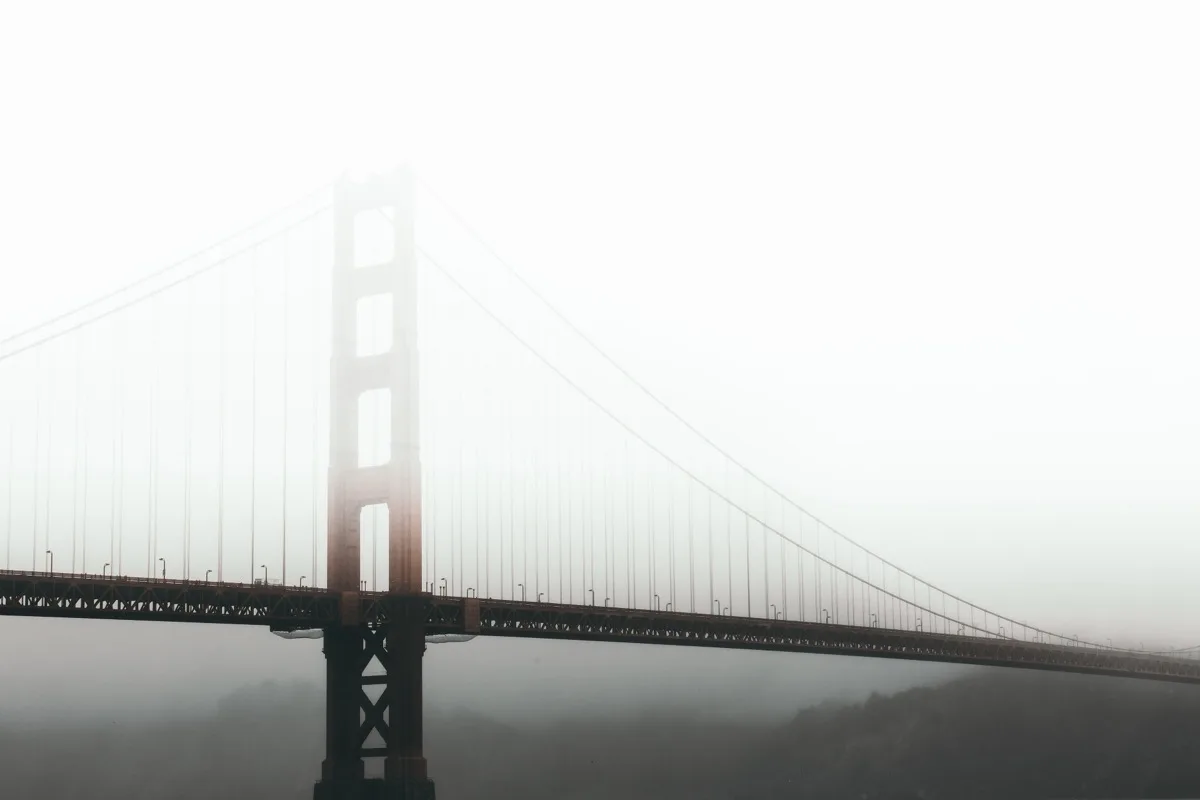
Hire bikes at the wharf, roll along Crissy Field, cross the bridge, freewheel down into Sausalito — and put the bikes on the ferry home.
Why it's here: The best thing you can do with children in this city, full stop. Almost all of it is flat, the drop into Sausalito is the highlight of the day, and the ferry back removes the one climb. Bring a layer — it is always windy and ten degrees colder up on the deck.
EveningPowell–Hyde cable car turntable· ~2h 30m
Board at the turntable by the wharf, ride over the crest above Lombard Street, and finish among the food stalls in the Ferry Building.
Why it's here: The cable car is an attraction that also happens to be transport, and this is the right direction to ride it — uphill from the wharf, where the queue is still short. The light over the bay at this hour is the best you'll get all day.
Day 3 · Collect the car, drive east into Yosemite
Yosemite
Collect the car you'll live in for a fortnight — and at the end of the day the valley opens all at once.
MorningYosemite Village· ~5h
Keys at a city-centre desk at 8:30, then about four hours on Highway 120 through Groveland to the park's western gate.
Why it's here: Leave before nine. The 120 is the shorter road (265 km) but it climbs past 1,800m, and when snow arrives early — rare in October, not unheard of — Highway 140 through Mariposa is the all-season alternative. Check the road status the morning you go.
AfternoonTunnel View, Yosemite National Park· ~2h
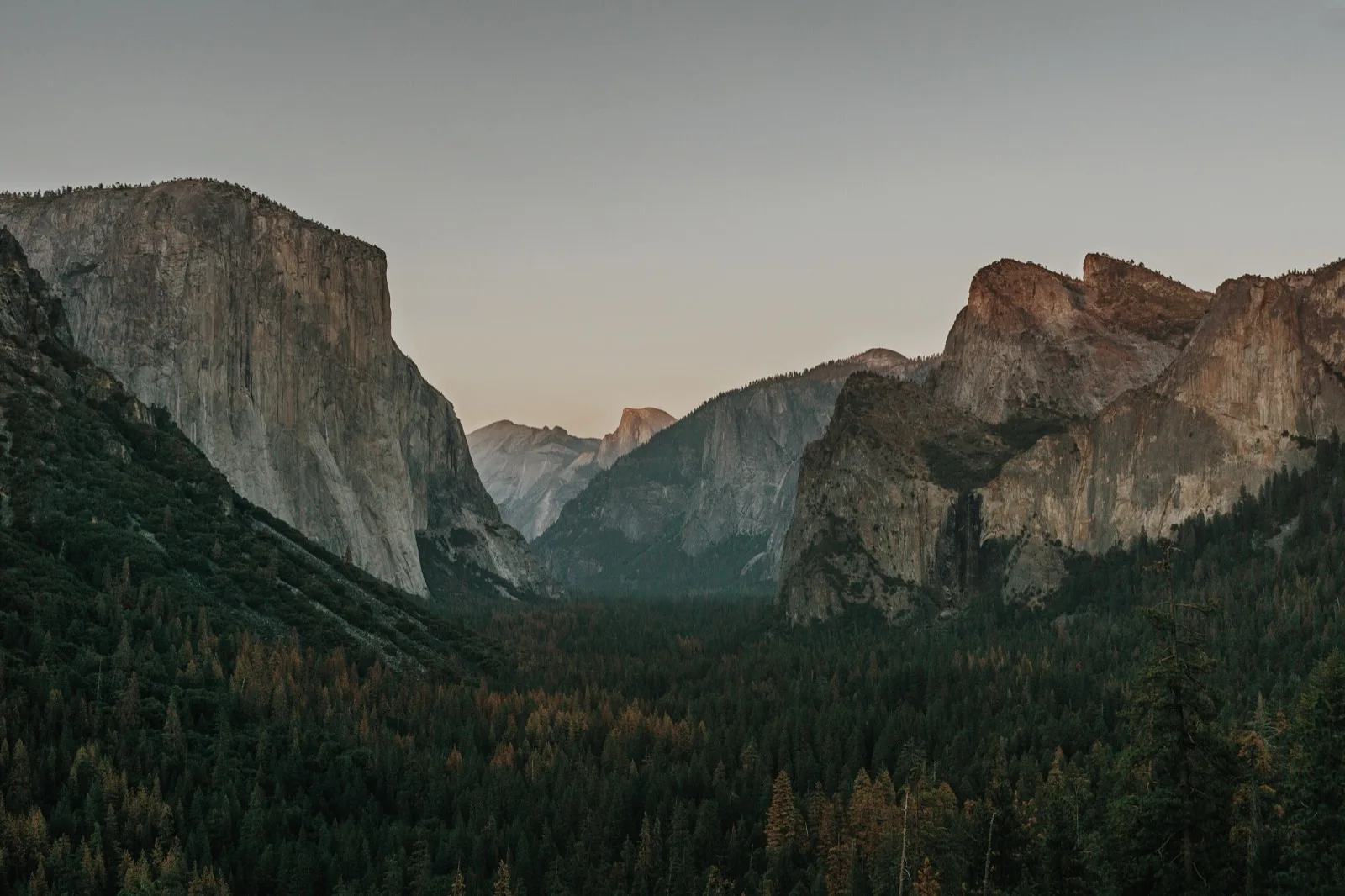
You come out of the tunnel and the whole valley arrives at once — El Capitan on the left, Half Dome at the back. Ten minutes on, the base of the fall.
Why it's here: This is the moment you came for and I want it to happen from the car, not at the end of a tired day. Bridalveil is the one fall still running in October — Yosemite Falls itself is bone dry from August until the first storm, which is fine, just don't promise it to the kids.
EveningSentinel Bridge and Cook's Meadow· ~1h 15m
A flat kilometre-and-a-half boardwalk loop in the middle of the valley, Half Dome on one side and the dry Yosemite Falls on the other.
Why it's here: Ten minutes' walk from the room, no car and no parking. At this hour the granite turns orange, the deer come out into the meadow, and everybody agrees the four-hour drive was worth it.
Day 4 · The valley floor: the Mist Trail and a bike
Yosemite
Up a river to a waterfall, then twenty flat kilometres of bike path between granite walls.
MorningVernal Fall footbridge· ~3h 30m
From Happy Isles, a paved kilometre and a half of climbing to the bridge facing the fall. Anyone with legs left carries on up 200 granite steps to the top.
Why it's here: Yosemite's signature walk, and October gives you the comfortable version: no spray, no slick steps, none of the July queue. The bridge is ninety minutes round trip with a twelve-year-old; the top is two hours more and 300 steps, and you decide that at the bridge.
AfternoonMirror Lake, Yosemite Valley· ~2h 30m
Hire bikes at the lodge and ride the paved loop out to El Capitan Meadow and up to Mirror Lake — dead flat, and you see more of the valley than the road shows you.
Why it's here: After a morning of climbing this is deliberately easy. The path also solves the parking problem: it reaches every spot the car struggles to stop at. Mirror Lake in October is mostly meadow rather than lake, so set expectations before you get there.
EveningYosemite Valley Lodge· ~2h
Dinner in the lodge food court, then ten minutes outside for stars with no city under them.
Why it's here: Four days in with ten to go. Nothing is booked here on purpose — tomorrow is a mountain road and an early start, and going to bed is part of the plan.
Day 5 · Glacier Point Road — Yosemite from above
Yosemite
A thousand metres above the valley, with a crack at the cliff edge you can look down through.
MorningGlacier Point· ~3h
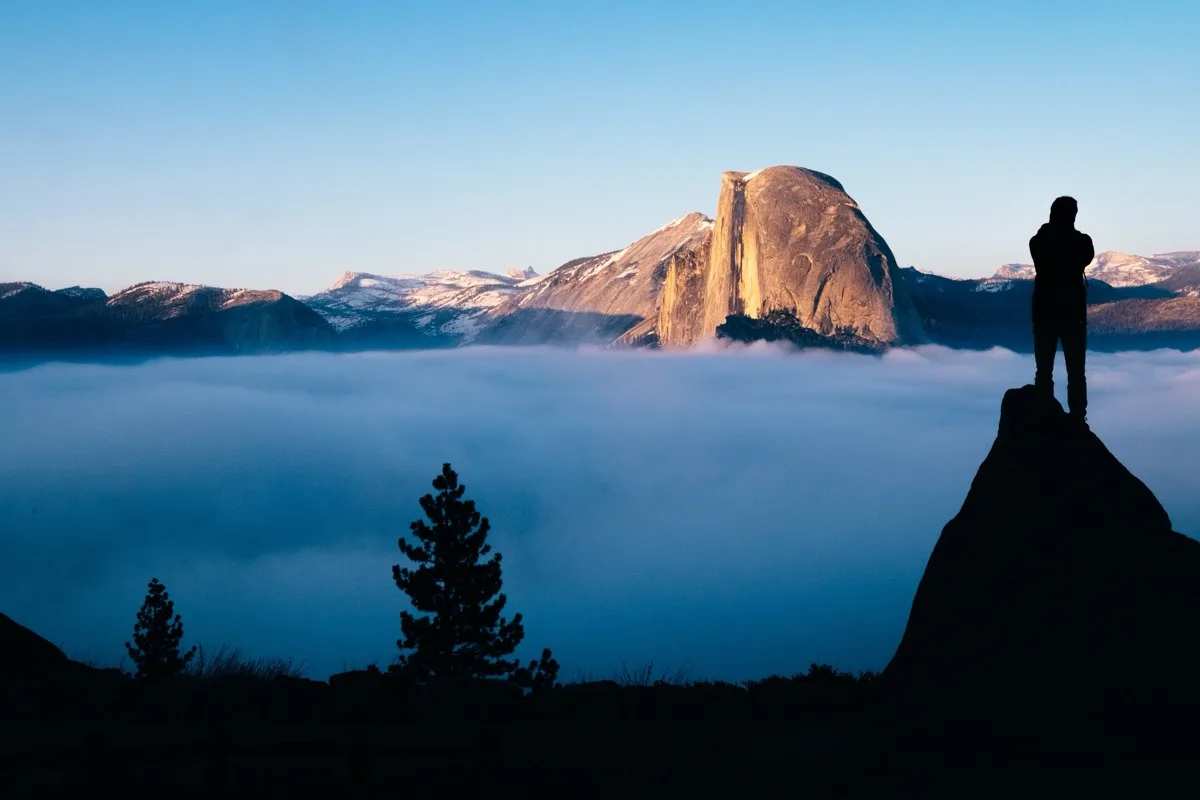
An hour's drive from the valley and 980 metres above it: a railing that looks Half Dome straight in the face, with three waterfalls in the same frame.
Why it's here: The biggest view in the park, and it is 300 paved metres from the car park — which means everyone gets there without an argument. The road shuts with the first serious storm, usually in November; October is nearly always fine, but it is a good reason to do this today rather than "sometime".
AfternoonTaft Point· ~3h 30m
An 8 km loop off the same road: open fissures at the cliff edge at Taft Point, and a bare granite dome with a full 360 at Sentinel.
Why it's here: If you only do one, do Taft Point — it is 2 km each way and the cracks at the lip of the cliff are the most astonishing thing a fifteen-year-old will see this week. There is no railing. Hold hands, seriously.
EveningYosemite Valley Lodge· ~2h
A proper meal behind the big windows, then pack — tomorrow leaves early.
Why it's here: This is the last good dinner until Los Angeles; from here on you are in towns of three hundred people. Book a table — the whole valley has three restaurants.
Day 6 · Mariposa Grove, then south to Sequoia
Sequoia
Three-thousand-year-old trees in the morning, flat farm country in the afternoon.
MorningMariposa Grove of Giant Sequoias· ~3h 30m
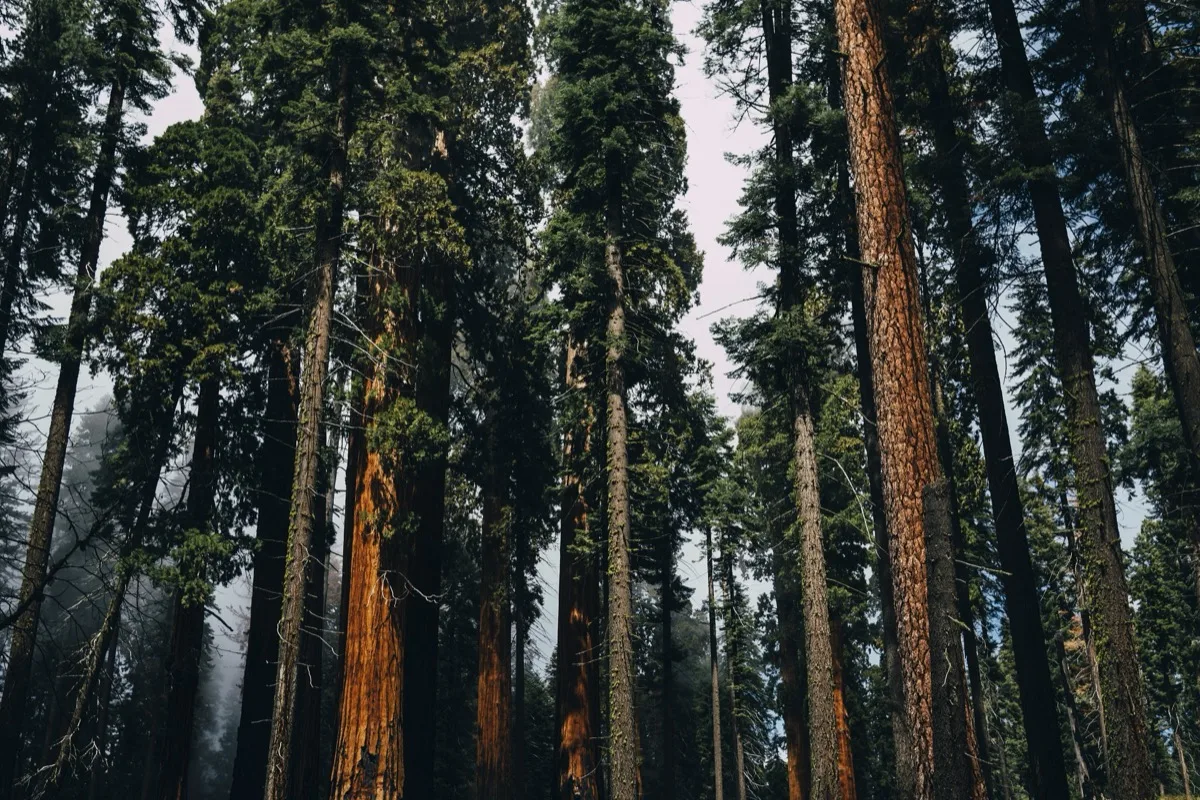
An hour south of the valley: park at the Welcome Plaza and take the free shuttle down. Waiting at the bottom, the Grizzly Giant at roughly 3,000 years old, and a tree somebody cut a tunnel through in 1895.
Why it's here: It is directly on the road south, so it costs you nothing but the morning. Private cars are not allowed into the grove — the shuttle runs 8am to 5pm this time of year, every fifteen minutes, and the Welcome Plaza's 300 spaces fill by late morning. Be there at nine and away by half eleven.
AfternoonThree Rivers, California· ~3h
Highway 41 drops out of the mountains into farm country, then the 99 and the 198 east — about three hours of orange groves, almond orchards and petrol stations.
Why it's here: The one dull stretch on the route, and that is fine: every fortnight of driving gets one. Stop in Fresno for lunch and a shop — it is the last real supermarket before three days of desert.
EveningBuckeye Tree Lodge, Three Rivers· ~2h
Check in, feet in cold water, and dinner at one of the town's two restaurants.
Why it's here: Tomorrow starts at seven, properly. This evening exists so that is possible.
Day 7 · The Giant Forest
Sequoia
The largest tree on earth, four hundred steps up a granite dome, and rock art on the way down.
MorningGeneral Sherman Tree· ~4h
An hour of switchbacks and 1,500 metres of climb up to the Giant Forest, then down to the largest tree on earth — 84 metres — and a 3 km loop among the rest of them.
Why it's here: Be in the car park by 8:15. The park shuttle only runs to early September, so in October everybody drives — and the Sherman lot fills by ten, after which you are sent to the upper lot and an 800-metre descent. The Congress Trail starts at the tree itself and loses ninety per cent of the crowd within a hundred metres.
AfternoonMoro Rock· ~4h
Four hundred steps cut into a granite dome looking out over the Great Western Divide, then the meadow John Muir called the gem of the Sierra — and a tree that fell in 1937 with a hole cut through it you drive under.
Why it's here: Moro Rock is a quarter of an hour of stairs with a handrail and a drop on both sides — the children will love it, and anyone with a head for heights can wait at the bottom without shame. Do it mid-afternoon once the haze burns off, and not at all if there is thunder about.
EveningHospital Rock· ~45m
A twenty-minute stop on the descent: Potwisha pictographs on a house-sized boulder, and the grinding holes worn into it over centuries.
Why it's here: It's free, it's on the road you are already driving down, and it is the only thing on this route that says out loud that people lived here for three thousand years before the forest was named after a general. Worth the twenty minutes.
Day 8 · Across the Eastern Sierra
Death Valley
The long one: across the Sierra, a stop in a western, and 1,500 metres down to the desert floor.
MorningLone Pine, Owens Valley· ~4h 30m
Four and a half hours south then east: the 198 to Visalia, the 99 to Bakersfield, the 58 over Tehachapi Pass, and US-395 north into the Owens Valley.
Why it's here: Leave at 7:30, not at nine. This is the long day — about 460 km and six and a half hours behind the wheel — and it is the one leg with no shortcut: there is no road across the Sierra between Yosemite and the Owens Valley. Fill the tank in Bakersfield.
AfternoonMobius Arch, Alabama Hills· ~2h
Rounded boulder country directly beneath Mount Whitney, the highest point in the lower 48. A fifteen-minute walk reaches a natural arch that frames the whole Sierra crest.
Why it's here: This is what turns the day from a transfer into a day. Roughly four hundred westerns were shot here, and anyone who ever played cowboys recognises the place without being told. Eat in Lone Pine and buy water: from here to Furnace Creek there is nothing.
EveningMesquite Flat Sand Dunes· ~3h
Highway 190 climbs over the Inyo Mountains to an overlook above Rainbow Canyon, then drops 1,500 metres to the valley floor and the sand at Stovepipe Wells.
Why it's here: You enter from the west, which means the dunes are on the way in rather than a separate expedition — and at five o'clock they are exactly the right colour and cool enough to walk barefoot. You'll reach Furnace Creek around half six, wrecked and on time.
Day 9 · Sunrise below sea level, sunset 1,670 metres above it
Ten minutes from the hotel to a terrace above crumpled badlands that go orange as the sun comes up behind you, then 3 km into the canyon itself before it warms.
Why it's here: In October the Death Valley timetable is set by the sun rather than by preference: everything outdoors happens before eleven and after four. Zabriskie faces west, which makes it a sunrise place and not a sunset one — the mistake half the park's visitors make.
MorningBadwater Basin· ~3h
The lowest ground in North America, 86 metres below sea level, with a sign on the cliff marking where the sea would be — and on the way back, 14 km of one-way road through hills of green, pink and violet.
Why it's here: Walk fifteen minutes out onto the salt itself — that is where you stop seeing people and start seeing the polygons. Save Artists Drive for the way north because it only runs in that direction, and at half ten the light on it is still low enough.
AfternoonThe Ranch at Death Valley, Furnace Creek· ~4h 30m
Back at the ranch by 11:30 and not moving until four: pool, shade, the Borax Museum and the thermometer by the gate.
Why it's here: This isn't a rest day, it is the plan. Mid-October runs 33–35°C at midday, and the only way to spend two days here with children is to cut the day in half and disappear in the middle.
EveningDantes View· ~3h
Forty-five minutes of driving and 1,670 metres of climb to a balcony directly above Badwater — the lowest point and the highest mountain in California in one frame.
Why it's here: The best thing in the park, and it is free. Take a jumper: it runs 10–15°C colder up there, which surprises everyone who sets off in flip-flops. The final grade is steep enough that large vehicles are discouraged; an ordinary car is simply working hard.
Day 10 · Across the Mojave, and onto Route 66
Joshua Tree
Dunes, lava, and Route 66 neon — then a fire under a sky with no lights in it.
MorningBaker, California· ~2h 45m
The 190 east to Death Valley Junction, then the 127 south through Shoshone to Baker — home to the tallest thermometer in the world, all 41 metres of it.
Why it's here: Fill up at Furnace Creek before you leave even if the tank is half full. Between here and Baker there are two stations, both expensive, and one of them has a habit of being shut.
AfternoonKelso Dunes, Mojave National Preserve· ~2h
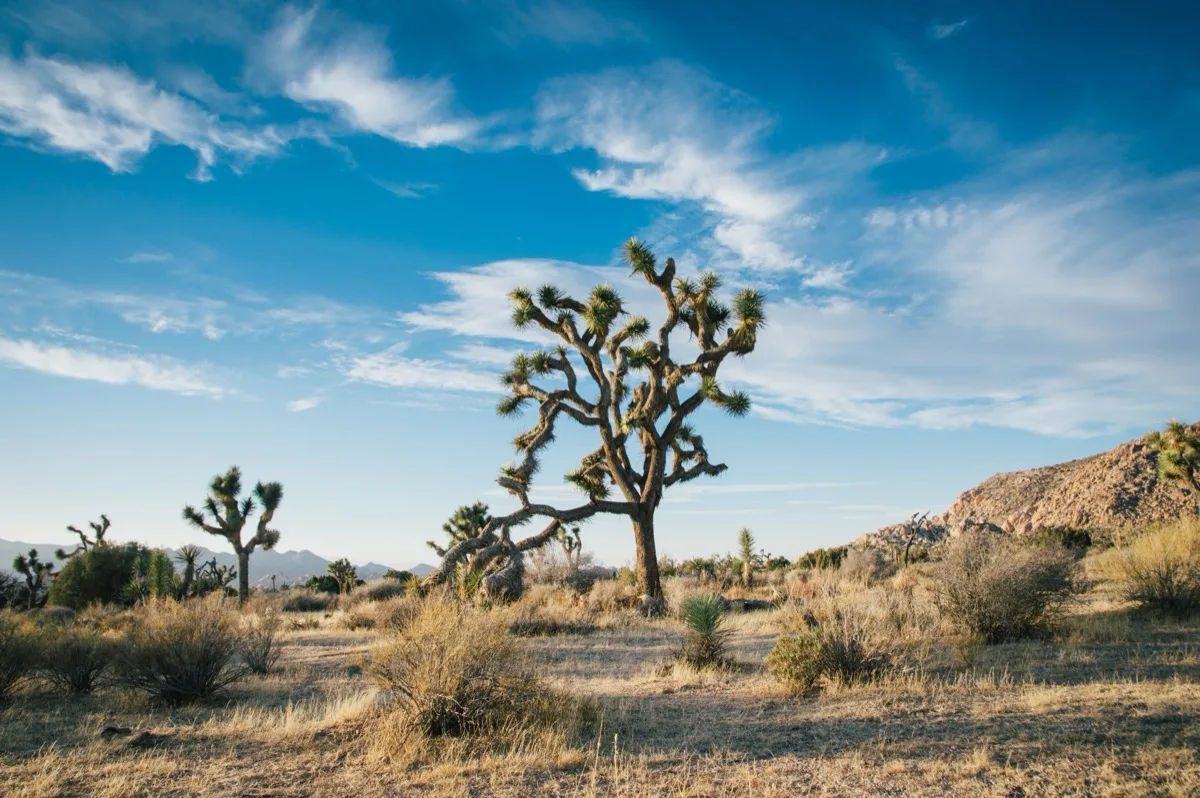
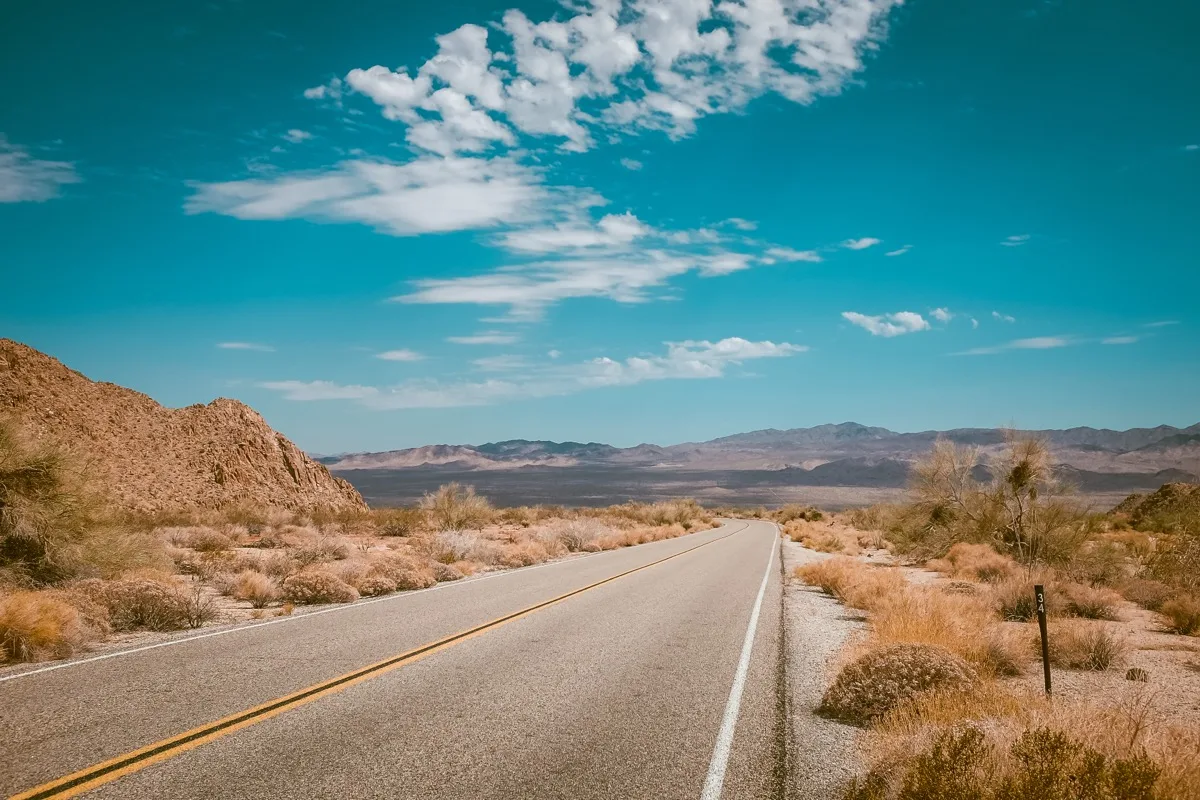
Kelbaker Road crosses the preserve north to south through lava fields and Joshua tree forest, past 200-metre dunes that boom when you slide down them.
Why it's here: This is both the short way between the parks and the beautiful one, so there is no trade to make. The dunes sit 5 km off the road down a dirt track an ordinary car handles easily when dry; after rain, don't.
EveningRoy's Motel and Café, Amboy, Route 66· ~2h 30m
Roy's neon sign on the old Route 66 with a black volcanic crater behind it, then an hour south on Amboy Road to the Airstream.
Why it's here: Roy's is ten minutes and one photograph, but it is the moment Route 66 stops being something you saw in a film. Get to Joshua Tree before dark, light the fire and look up — this park is a certified International Dark Sky Park.
Day 11 · The Joshua Tree day
Joshua Tree
Joshua tree forest, a climbing lesson, a cactus field that lights up at dusk, and the San Andreas Fault.
MorningBarker Dam and Hidden Valley· ~3h
Two short loops just inside the west entrance: a valley walled in by rock that nineteenth-century cattle rustlers used as a pen, and a small reservoir with Serrano rock art beside it.
Why it's here: Be through the west gate by 7:30 — not because of heat but because of the queue, which is half an hour long by ten. The two loops together are under 4 km and flat, and they are all of Joshua Tree in two hours.
MorningJumbo Rocks· ~3h 30m· $0 per person
Two or three hours on real rock with a guide and kit provided — Joshua Tree is one of the great climbing venues on earth, with more than 8,000 charted routes.
Why it's here: If there is one thing worth booking ahead in this park, this is it. The children are going to climb on these rocks regardless — better that it happens with a rope and somebody who knows the rock. Take a morning slot; by afternoon the granite is too hot to hold.
AfternoonCholla Cactus Garden· ~3h 30m
A car-sized skull right at the roadside, a boulder field built for scrambling, then half an hour south to a basin filled with thousands of densely packed cholla.
Why it's here: The Cholla Garden only works in low light — at half four the spines backlight and that is the photograph of the day. Do not touch them: the segments break off and stick, which is how they earned the name teddy-bear cactus.
EveningKeys View· ~2h
1,580 metres above the Coachella Valley: the Salton Sea, San Jacinto opposite, and the San Andreas Fault ploughed across the floor below.
Why it's here: Twenty minutes off the main road, and one of the few places you can see plate tectonics with the naked eye — the fault reads as a straight green stripe, because water rises along it. On a clear evening you can see into Mexico.
Day 12 · Desert to ocean
Los Angeles
Leave the desert in the morning, reach the ocean in the afternoon.
MorningPalm Springs, California· ~1h 30m
An hour south-west, from 900 metres of high desert down into a valley of palms and 1950s modernist architecture.
Why it's here: Leave at eight. Not because of Palm Springs — because of the I-10: set off at ten and the three-hour drive becomes four. A long lunch here is the right way to let the traffic settle.
AfternoonSanta Monica Pier· ~3h
Two and a half hours through Riverside and downtown Los Angeles, until the freeway simply stops in Santa Monica.
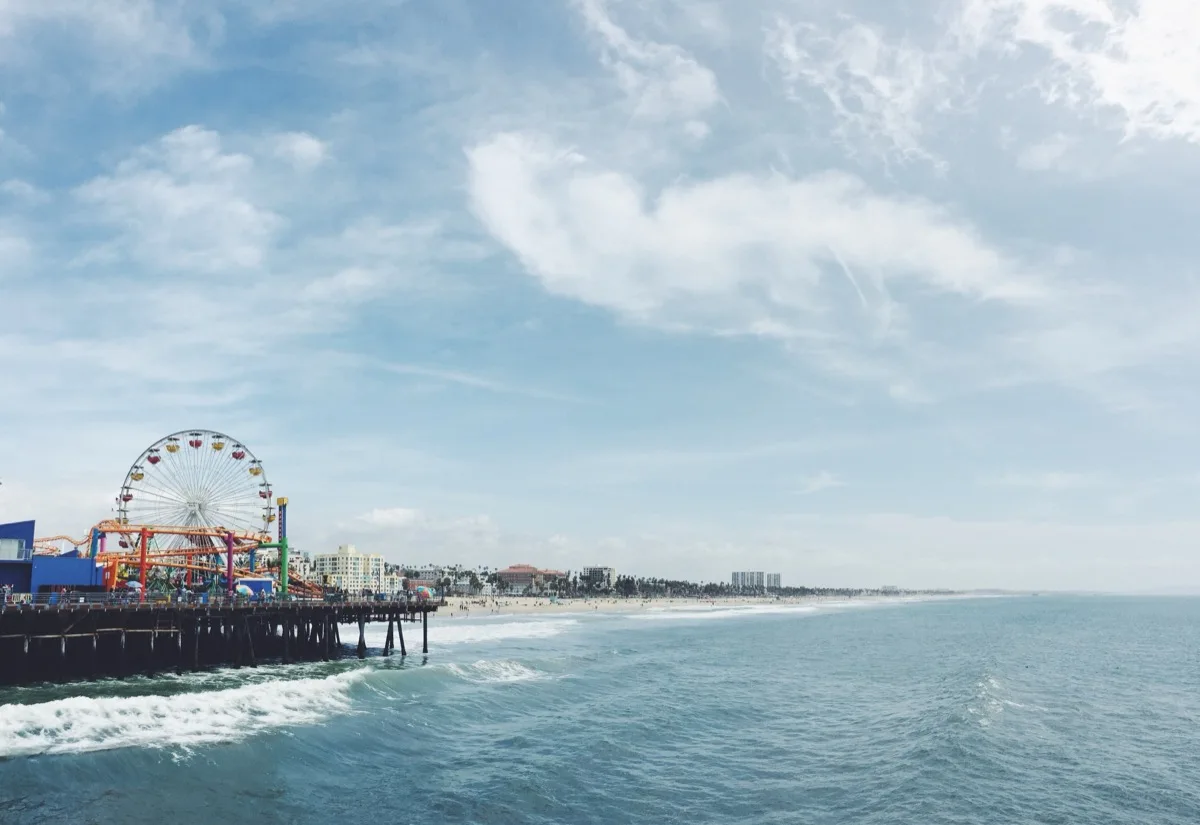
Why it's here: Watch for the moment the road ends: historic Route 66 finished right here, at the Ocean Avenue junction. After eleven days of desert it is the correct place to stop.
EveningSanta Monica Pier· ~2h 30m
A 1922 carousel, a solar-powered Ferris wheel, and an End of Route 66 sign at the far end. The trip's first Pacific.
Why it's here: After two thousand kilometres of dry rock, letting the children run into the ocean at sunset is not a line on the plan — it is the end of the story. The pier is free to walk; every ride on it is sold separately.
Day 13 · Venice in the morning, Griffith at night
Los Angeles
Boardwalk and canals by day, and the whole of Los Angeles switching on beneath you at night.
MorningVenice Canals, Dell Avenue· ~3h 30m
The Marvin Braude path hugs the sand the whole way: the Venice boardwalk with its weightlifters and skaters, and three streets inland, real canals with little bridges from 1905.
Why it's here: Twenty minutes' ride from the hotel, entirely flat, and the one piece of Los Angeles you can do without a car. The canals are the surprise — two streets off a crowded boardwalk and it goes completely quiet.
AfternoonGriffith Observatory· ~4h
A 1935 art-deco building on the Hollywood hillside: a Foucault pendulum, a Tesla coil, a Zeiss telescope open to the public after dark — and the Hollywood sign from the terrace.
Why it's here: Entry is free, but the hours catch people out: Tuesday to Friday it opens at noon, and it is shut all day Monday. Don't drive to the top — the lot is full from one o'clock; there is a DASH bus from the Metro station and that is the answer.
EveningGrand Central Market, Downtown Los Angeles· ~3h
Stay on the lawn until the city lights up underneath you, then drop downtown to a covered market from 1917 with forty stalls in it.
Why it's here: The best view in Los Angeles is free and it is at exactly this hour. And at the market everyone picks something different — tacos, ramen, a pastrami counter that has been there since 1917 — which is precisely what a family who has eaten in park lodges for a fortnight needs on the last night.
Day 14 · Return the car, fly home
Los Angeles
Two thousand kilometres, sand in the footwells, and a flight home.
MorningSanta Monica Pier· ~2h 30m
Late checkout if they'll give you one, and a final hour on the sand in front of the hotel.
Why it's here: After a fortnight of seven o'clock starts, this morning is owed to you. Pack the night before so it actually happens.
AfternoonLos Angeles International Airport· ~2h
Thirty-five minutes south, then the airport's new consolidated rental centre, with its own train to the terminals.
Why it's here: Around 2,000 km on the odometer, sand in the footwells and a full tank. Give it two hours rather than one: the rental centre opened in 2026 but it is off-airport, and reaching the terminal is another ride.
Everything on one map.
The hotel and every place on the itinerary — "Find on map" next to a place focuses it here
Loading map…
HotelAttractionRestaurantActivity
Tips from Max.
The nonresident annual parks pass costs $250 from 1 January 2026, and on this route it almost always pays. Without it, Yosemite and Sequoia each charge non-US residents aged 16+ a $100 per-person surcharge on top of the $35 vehicle fee — about $470 for two adults across those two parks alone, before Death Valley and Joshua Tree at $30 a vehicle each. The pass waives both, for everyone in the car.
Yosemite has dropped its entry reservation requirement for 2026 — there is no timed ticket any more. That is not the same as no crowds: the valley car parks fill by 7:30am, which is exactly why this itinerary sleeps inside the park.
Book three things the day your dates are fixed: Yosemite Valley Lodge (rooms open 366 days ahead), the Alcatraz ferry (90 days ahead), and the Airstream in Joshua Tree. Everything else here can be arranged a week out.
Sequoia's shuttles only run to early September, so in October you drive to every trailhead yourself — and the General Sherman lot is full by ten. Yosemite Valley is the opposite: its free shuttle keeps running 7am to 10pm through October.
Pack for three climates. Death Valley in mid-October is 34°C; Yosemite the same week drops to 6°C overnight; and Dante's View, an hour from the hotel, is ten degrees colder than the valley floor. One fleece each is not enough.
Refuel below half a tank, not on empty. Between Three Rivers and Lone Pine, inside Death Valley, and across the Mojave Preserve there are 150 km stretches with nothing, and some of the stations shut at dusk.
There is no fuel and no water inside Joshua Tree, and almost no mobile signal in any of the four parks. Download offline maps before you leave San Francisco, and carry at least four litres of water per person on every desert day.
Death Valley cools week by week through October — 38°C in the first week, 33°C by the third. If the dates are flexible, push the trip into the second half of the month; that is the difference between two days you can be outdoors and two days beside the pool.
Common questions.
How many days do you need for a California national parks road trip?
Fourteen is the comfortable number for this route, and it is also the shortest that isn't a forced march. Yosemite needs three nights, Death Valley and Joshua Tree two each, and San Francisco and Los Angeles two apiece to be anything more than a landing and a departure. Ten days is possible if you drop Sequoia and a night at each end — but then three of the days are nothing but driving.
When is the best time to go?
The second half of October, which is what this itinerary is built for. Yosemite at 22°C instead of 32°C, the valley shuttle still running, summer holidays over — and above all Death Valley at 33°C rather than the 38°C of the first week. April to May is the other window, when the Yosemite waterfalls are running; the cost is that Tioga Pass and Glacier Point Road are still closed by snow.
Do you need a reservation to enter Yosemite in 2026?
No. Yosemite announced it is not running a timed-entry reservation system in 2026, so you can simply drive in. The park manages congestion on the ground instead — and what actually limits you is parking: the valley lots are full by 7:30am. The only fix that works is sleeping inside the park, which is what this itinerary does.
What do the parks cost, and what is the new nonresident surcharge?
From 1 January 2026, anyone who is not a US resident pays $100 per person aged 16 and over at eleven designated parks — on this route Yosemite, Sequoia and Kings Canyon are on that list — on top of the ordinary $35 vehicle fee. Death Valley and Joshua Tree are not on the list and charge $30 a vehicle. The $250 nonresident annual pass waives both the entrance fee and the surcharge everywhere, which on this route saves a family several hundred dollars.
What car do you need, and where should you pick it up?
A mid-size SUV is right for four people and two weeks of luggage; nothing on this route requires four-wheel drive. Collect it in downtown San Francisco on day three rather than at the airport on arrival — two fewer rental days, and no nights of city parking at $50–70 apiece. Drop it at LAX; one-way fees within California are usually modest, but get the figure in writing before you book.
Is Kings Canyon actually on this itinerary?
Not in full, and I would rather say so up front. The two nights in Three Rivers buy one big day in Sequoia's Giant Forest — General Sherman, Moro Rock, Crescent Meadow. Cedar Grove, which is the canyon itself, is two and a half hours from any sensible base and without another night there is simply nowhere to put it. If ticking Kings Canyon matters, swap Hospital Rock for Grant Grove: an extra hour each way, and an 82-metre tree at the end of it.
Love it? Take it with you.
One click creates your own copy of this itinerary — upcoming dates, re-checked prices, and the freedom to change every detail. Or have Max build you a new one, from scratch, just for you.